Skip to content
A fire can be a devastating event for any property owner. Beyond the immediate destruction, the aftermath presents a complex challenge: deciding how to rebuild and recover. While some damage might seem minor, the pervasive nature of smoke and soot means professional intervention is often crucial. Understanding when fire damage restoration is a worthwhile investment can save you time, money, and stress in the long run.
Key points
- Fire damage involves more than just visible charring; smoke and soot penetrate deeply.
- Professional assessment is key to understanding the full scope of fire-related issues.
- Restoration is often more cost-effective than complete replacement.
- Specialized cleaning and deodorization are critical components of fire damage restoration.
- Structural integrity issues necessitate reconstruction and structural restoration services.
- Consider professional help when damage is extensive or involves hazardous materials.
The Lingering Effects of Fire
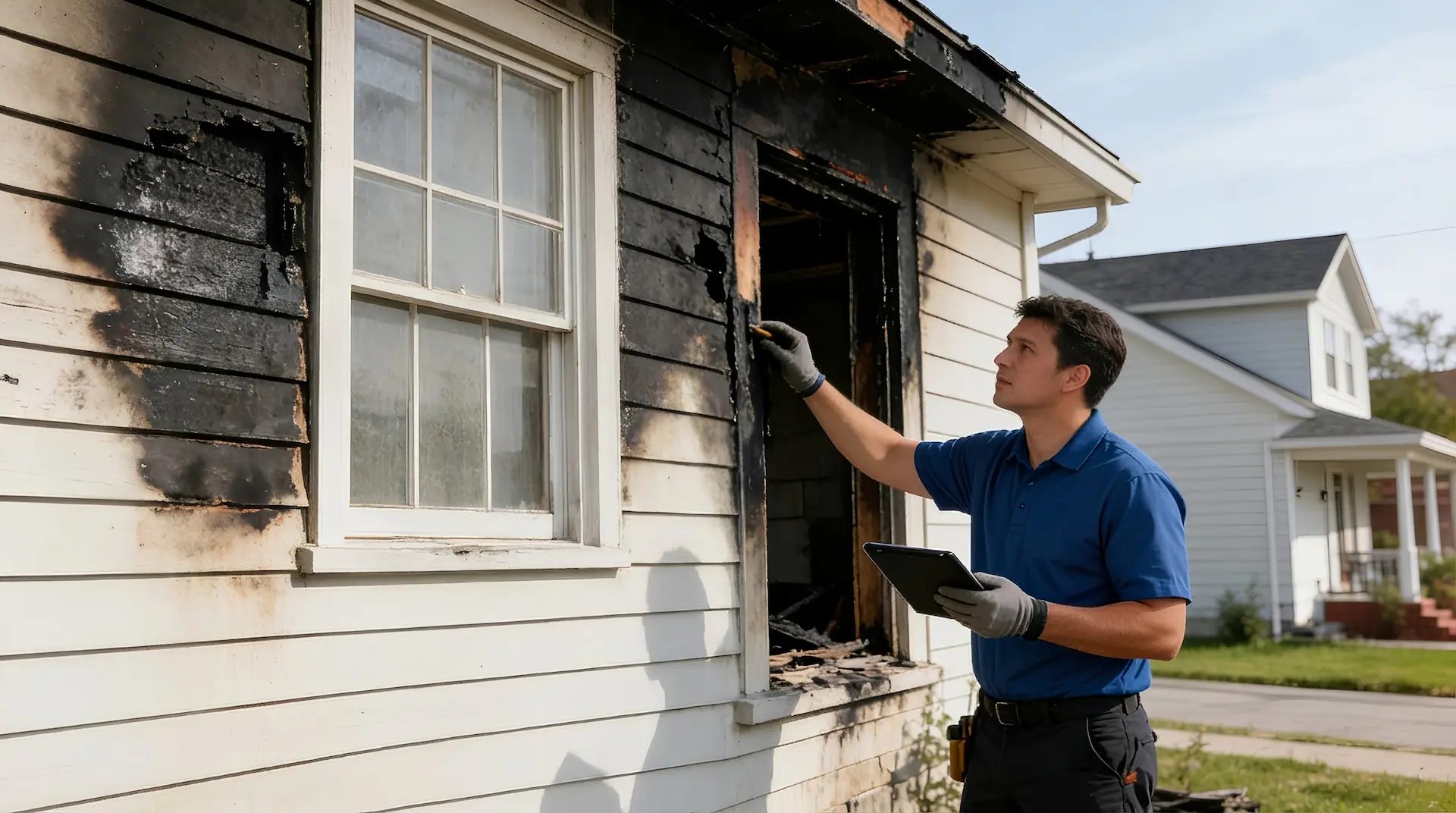
Fire damage extends far beyond visible charring. Smoke particles are incredibly fine and can penetrate porous materials like drywall, insulation, and even the internal structure of your home. These particles carry odors and corrosive residues that can continue to degrade materials and pose health risks if not properly removed. The heat from a fire can also weaken structural components, making them unsafe. Even a small fire can lead to significant secondary issues, including mold growth if moisture is introduced during firefighting efforts, necessitating comprehensive water damage restoration alongside fire cleanup.
Assessing the Scope of Damage
When faced with fire damage, the first step is a thorough assessment. Visible damage is only part of the equation. A professional restoration service will look for smoke penetration into wall cavities, HVAC systems, and electrical wiring. They will also evaluate the structural integrity of beams, supports, and framing. The type of materials affected is also important; some are more susceptible to permanent damage or staining than others. This detailed inspection helps determine the full extent of the problem, which is essential for deciding on the appropriate course of action.
When Restoration Outweighs Replacement
The decision to restore or replace often comes down to cost and feasibility. In many cases, professional fire damage restoration is more economical than rebuilding from scratch. Skilled technicians can clean, deodorize, and repair materials that might otherwise need removal. This includes specialized techniques for cleaning soot from delicate surfaces, neutralizing odors deep within structures, and repairing or reinforcing damaged structural elements. When significant portions of the property are salvageable, restoration offers a path to recovery that preserves the existing structure and minimizes disruption.
The Role of Specialized Cleaning and Reconstruction
Effective fire damage restoration involves more than just basic cleaning. It requires specialized equipment and knowledge to address the unique challenges posed by smoke, soot, and heat. Professionals use advanced cleaning agents and techniques to remove residues without damaging surfaces. Deodorization processes are critical for eliminating lingering smoke smells. Furthermore, if the fire has compromised the building’s structure, reconstruction and structural restoration services become essential. This can range from repairing minor damage to extensive rebuilding efforts, ensuring the property is safe and sound.
Factors Favoring Professional Intervention
Several factors strongly suggest that professional fire damage restoration is the best option. If the fire was significant, involving extensive smoke and soot spread, professional cleaning is almost always necessary. When structural integrity is in question, reconstruction experts are needed. Moreover, if the fire occurred in a way that introduced moisture, requiring water damage restoration, a coordinated approach from specialists is vital. Attempting to handle extensive damage without professional help can lead to incomplete cleaning, persistent odors, and unresolved structural issues, ultimately costing more to fix later.
Common questions
Is fire damage restoration always necessary after a fire?
Fire damage restoration is often necessary because smoke and soot can penetrate deeply into materials and structures, causing ongoing damage and odor issues. Even seemingly minor fires can leave behind corrosive residues that require specialized cleaning.
How does fire damage differ from water damage?
Fire damage primarily involves smoke, soot, heat, and charring, which can weaken materials and leave persistent odors. Water damage, often a secondary effect of firefighting, involves moisture that can lead to mold growth, rot, and structural weakening if not properly addressed through water damage restoration.
When should I consider reconstruction and structural restoration?
Reconstruction and structural restoration are necessary when the fire has compromised the building’s framework, walls, roof, or other load-bearing elements. It’s also crucial if significant portions of the property are damaged beyond simple cleaning and repair.
Can I clean up fire damage myself?
For minor, superficial soot on non-porous surfaces, some DIY cleaning might be possible. However, for widespread smoke and soot, deep-set odors, or structural concerns, professional fire damage restoration is highly recommended to ensure thorough and safe remediation.