Skip to content
Discovering mold in your home can be unsettling. While the urge to tackle it yourself might be strong, especially for small spots, understanding the scope and risks of mold growth is crucial. This guide helps you weigh the decision between a DIY approach and hiring a professional mold remediation service.
Key points
- DIY mold remediation is only advisable for very small, surface-level mold issues.
- Improper DIY removal can spread mold spores and worsen the problem.
- Health risks are significant when handling mold without proper equipment and knowledge.
- Professionals offer expertise, specialized equipment, and a systematic approach to ensure complete mold removal.
- Mold remediation is often linked to water damage restoration and may require reconstruction services.
The Risks of DIY Mold Remediation
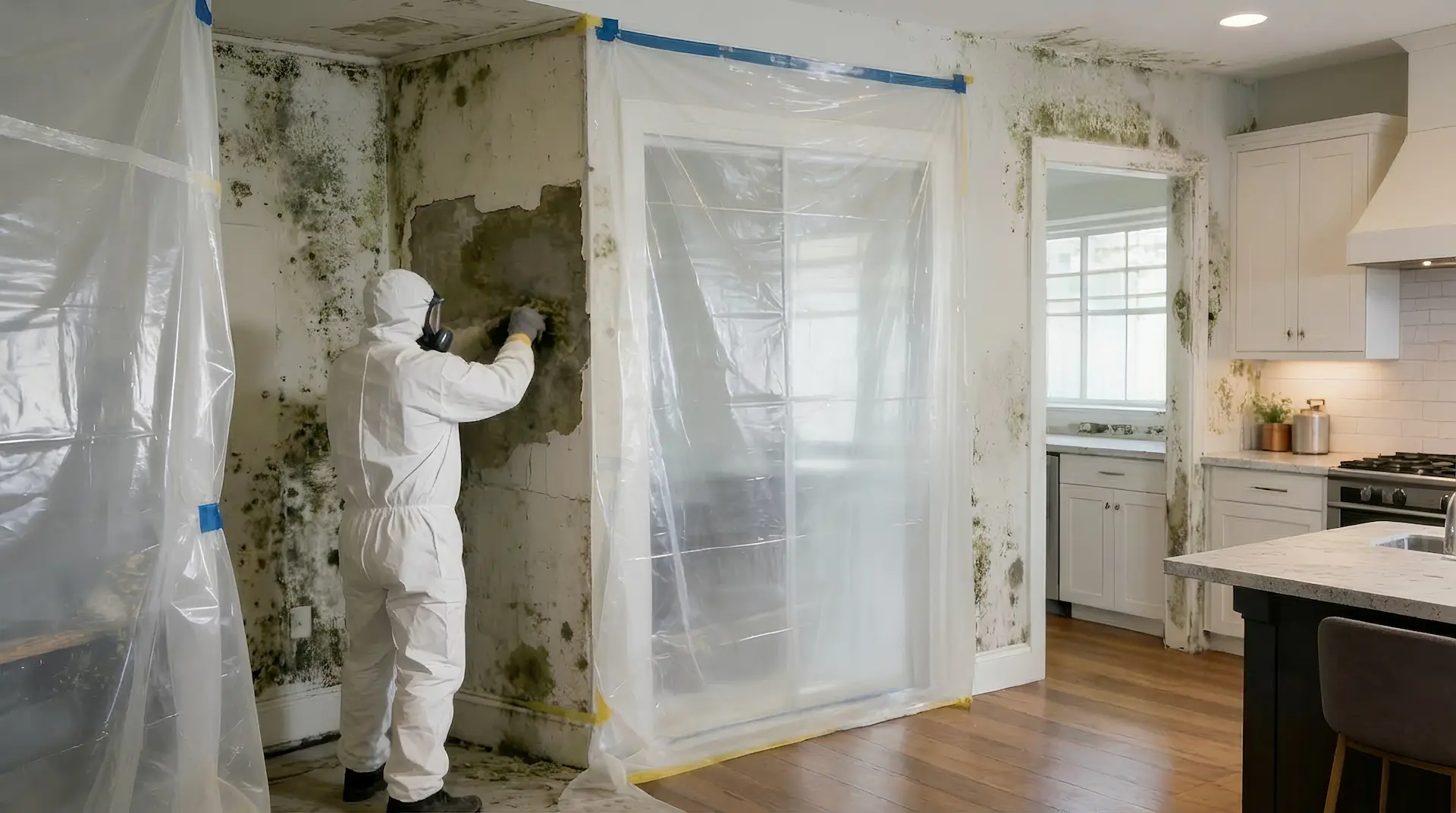
Attempting to remove mold yourself can lead to several complications. Surface mold might appear easy to clean, but the underlying issue could be more extensive. Inadequate containment during DIY efforts can allow mold spores to spread to other areas of the property. This exacerbates the problem, potentially requiring more intensive remediation later. Furthermore, improper cleaning methods can damage surfaces, leading to costly repairs. Health risks are also a significant concern; inhaling mold spores can trigger allergic reactions, asthma, and other respiratory problems, especially for individuals with pre-existing sensitivities. Without proper personal protective equipment (PPE) and knowledge of containment procedures, DIYers can expose themselves and their families to these health hazards.
When DIY Might Seem Viable
For very small, isolated areas of surface mold, typically less than one square foot, a DIY approach might be considered. This usually involves mold that has appeared due to a minor, recent water intrusion that has been quickly resolved. In such cases, using appropriate cleaning solutions and ensuring good ventilation can sometimes manage the issue. However, it’s vital to ensure the moisture source has been completely eliminated. Even small mold patches can be a sign of a larger problem lurking behind walls or under flooring. If there is any doubt about the extent of the mold or the source of moisture, professional assessment is always recommended.
The Professional Mold Remediation Advantage
Professional mold remediation services offer a systematic and comprehensive approach. Experts are trained to identify the type of mold, assess its extent, and determine the root cause of moisture. They utilize specialized equipment for containment, air filtration, and thorough cleaning. This ensures that mold is not just removed from surfaces but that spores are eliminated from the air and surrounding materials. Professionals also have the expertise to handle different types of materials, from drywall and wood to fabrics and delicate finishes, minimizing damage during the remediation process. Their work often includes post-remediation testing to confirm that the environment is safe and healthy. This level of expertise is particularly important when dealing with mold that has resulted from significant water damage restoration or fire damage restoration scenarios, where structural integrity may also be compromised.
Beyond Mold: Related Restoration Services
Mold growth is often a consequence of other building issues. Persistent moisture problems can lead to significant water damage restoration needs, requiring professionals to dry out structures and prevent further decay. In severe cases, mold can develop after fire damage restoration if water was used extensively to combat the blaze and was not properly managed. Reconstruction and structural restoration may become necessary if mold has compromised building materials. Hiring a professional remediation company that also offers these related services can streamline the recovery process, ensuring a holistic approach to restoring your property’s safety and integrity.
Making the Decision
The choice between DIY and professional mold remediation hinges on several factors. Consider the size and location of the mold growth. Assess your comfort level with handling potentially hazardous materials and your access to proper safety equipment. If the mold covers a large area, is in a hard-to-reach place like an HVAC system, or if you or anyone in your household has health sensitivities, professional intervention is strongly advised. Professionals provide peace of mind, ensuring the mold is effectively removed and the underlying moisture issue is addressed, preventing future recurrences and safeguarding your home’s health and structure.
See our Mold Remediation page for how Allinhomerestoration can help.
Common questions
When is it safe to attempt DIY mold remediation?
It is generally considered safe to attempt DIY mold remediation only for very small, isolated patches of surface mold, typically less than one square foot, that have resulted from a minor, recent water issue which has been fully resolved.
What are the main health risks associated with DIY mold removal?
The main health risks involve inhaling mold spores, which can trigger allergic reactions, worsen asthma symptoms, and cause other respiratory problems, particularly for sensitive individuals, without proper containment and protective gear.
How do professionals ensure mold is completely removed?
Professionals use specialized equipment for containment and air filtration to capture mold spores, identify the root moisture source, and apply effective cleaning and removal techniques, often followed by testing to confirm a safe environment.
Can mold remediation be part of water damage restoration?
Yes, mold remediation is often a critical component of comprehensive water damage restoration, as mold can begin to grow within 24-48 hours of water intrusion if the area is not properly dried and treated.
What is reconstruction/structural restoration in relation to mold?
Reconstruction and structural restoration refer to the repair or rebuilding of parts of a property that have been damaged by mold growth, especially when the mold has compromised the integrity of building materials like wood or drywall.