Skip to content
Addressing mold growth in your home is a critical task that requires careful planning and execution. While the goal is always complete removal and prevention, several common mistakes can undermine even the best intentions. Understanding these potential errors can help homeowners and property managers ensure that mold remediation efforts are successful and long-lasting, safeguarding both the structure and the health of its occupants.
Key points
- Always identify and repair the moisture source before cleaning mold.
- Proper containment is essential to prevent spore spread.
- Use appropriate cleaning agents and personal protective equipment.
- Understand when professional mold remediation is necessary.
- Document the remediation process, especially for insurance claims.
Ignoring the Source of Moisture
The most significant oversight in mold remediation is failing to identify and fix the underlying moisture problem. Mold requires a water source to grow and thrive. Simply cleaning visible mold without addressing the leak, condensation, or high humidity will inevitably lead to its return. This could involve repairing plumbing leaks, improving ventilation in bathrooms and kitchens, sealing exterior cracks, or managing condensation on windows and pipes. Without a comprehensive approach that tackles the root cause, any mold remediation effort is temporary.
Inadequate Containment
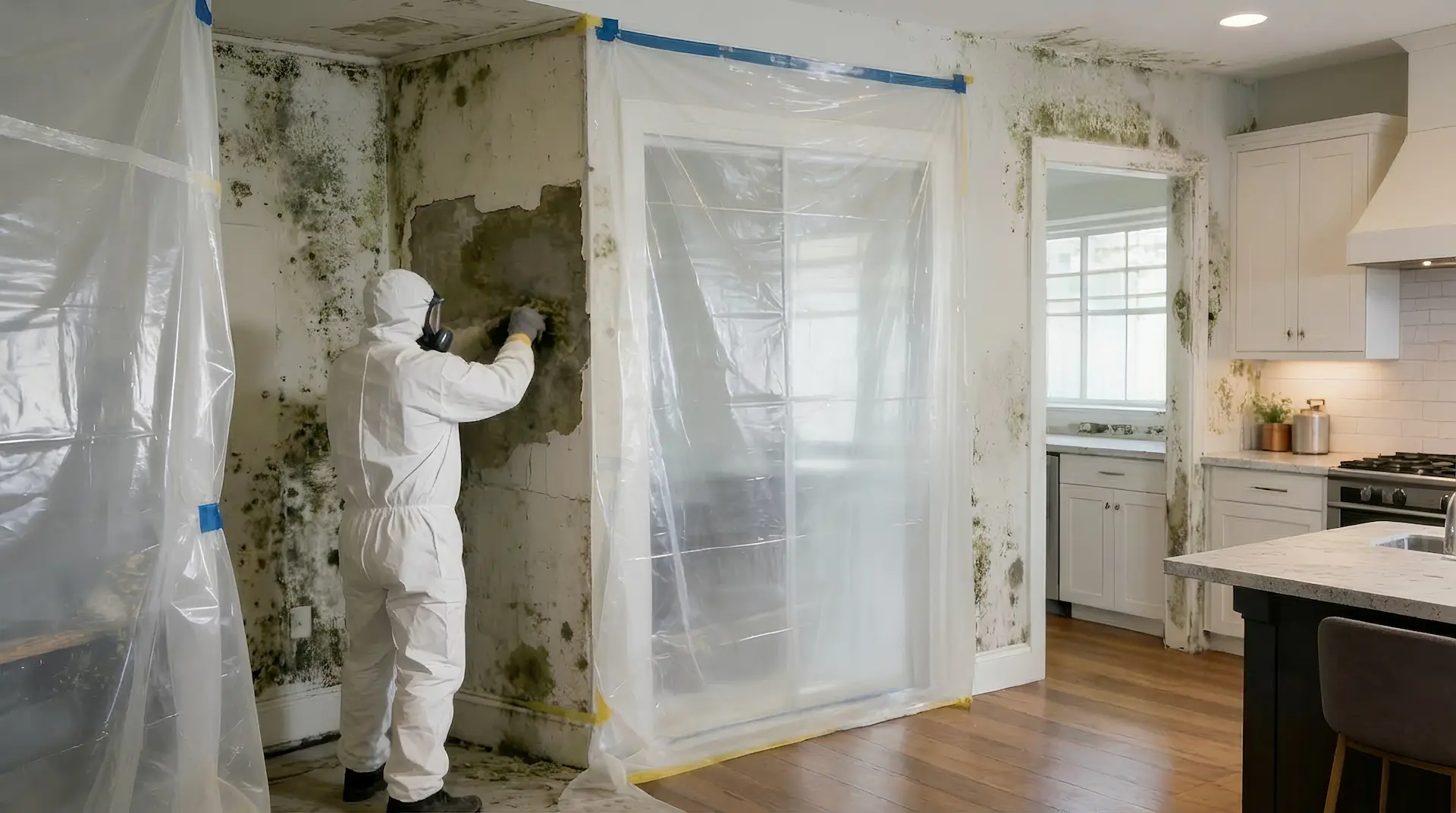
Proper containment is essential to prevent mold spores from spreading to unaffected areas of the property during the remediation process. Many DIY attempts or even professional jobs that cut corners might fail to establish effective barriers. This involves sealing off the affected area with plastic sheeting and negative air pressure. Without this, airborne spores can settle on furniture, carpets, and HVAC systems, creating new growth sites and potentially exposing more people to the mold. This is particularly critical when dealing with significant water damage restoration scenarios.
Using the Wrong Cleaning Agents
While bleach is often thought of as a mold killer, it’s not always the most effective or safest solution, especially on porous materials. Bleach primarily works on non-porous surfaces and may not penetrate materials like drywall or wood to kill the mold’s roots. Furthermore, mixing cleaning chemicals can produce toxic fumes. Professionals often use specialized, EPA-approved antimicrobial solutions, and their application methods are designed to be safe and effective. For extensive mold issues, professional mold remediation is often the safest and most effective route.
Over-Reliance on Surface Cleaning
Mold can penetrate porous materials like drywall, insulation, and wood. Merely cleaning the surface might remove visible mold but leaves the microscopic roots intact, allowing it to regrow. In many cases, contaminated materials must be carefully removed and disposed of. This is a key step in effective mold remediation and often leads into reconstruction or structural restoration if the mold has caused significant damage to building materials.
Failing to Involve Professionals When Necessary
For small, isolated mold spots, a homeowner might be able to manage the cleanup. However, if mold covers a large area, has resulted from significant water damage, or is suspected to be toxic (like black mold), professional intervention is crucial. Professionals have the training, equipment, and protective gear to handle mold safely and effectively. They can also perform air quality testing before and after remediation to ensure the problem is fully resolved. This expertise is invaluable, especially when dealing with complex situations that might require extensive water damage restoration or even fire damage restoration if mold is a secondary issue.
Improper Personal Protective Equipment (PPE)
When attempting to clean mold, inadequate protection can lead to health issues. This includes not using N-95 respirators, gloves, and eye protection. Mold spores can cause respiratory problems, allergic reactions, and other health concerns. Professionals always use appropriate PPE to protect themselves and prevent cross-contamination. Ignoring this aspect can turn a simple cleanup into a health hazard.
Not Documenting the Process
For insurance purposes or future reference, documenting the mold remediation process can be important. This includes photos of the mold before, during, and after cleanup, as well as records of any materials removed or replaced. This documentation is especially vital if the mold resulted from an event covered by insurance, such as storm damage that led to water damage restoration needs. Having a clear record can support claims and demonstrate due diligence.
Common questions
What is the biggest mistake people make during mold remediation?
The most significant mistake is failing to address the underlying source of moisture that is allowing the mold to grow. Without fixing the leak, condensation, or humidity issue, the mold will inevitably return.
Can I clean mold myself?
For very small, isolated areas of mold, you might be able to clean it yourself. However, if the mold covers a large area, is associated with significant water damage, or if you have health concerns, it is highly recommended to hire professionals for mold remediation.
Does bleach kill mold?
Bleach can kill surface mold on non-porous materials, but it may not penetrate porous materials effectively to kill the roots. It can also create toxic fumes, and professionals often use more specialized and safer antimicrobial solutions.
How do I prevent mold from coming back after remediation?
Preventing mold regrowth involves controlling humidity levels, ensuring proper ventilation in damp areas, promptly fixing any water leaks, and addressing condensation issues. Continuous monitoring of potentially damp areas is also key.